
Easter: Why the Resurrection Changes Everything
Easter: Why the Resurrection Changes Everything
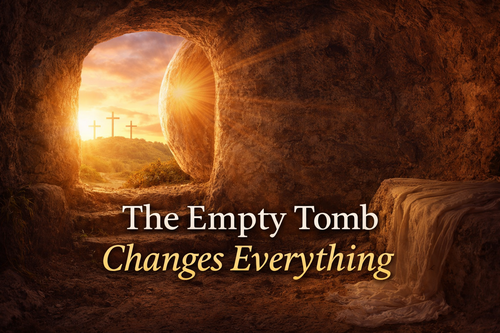
Photo Source: Artificially Generated
Note: If you have any questions about this topic or any of Pastor John's blog articles, feel free to contact him directly at pastor.john@fbcmoriarty.org, or you may contact the church office at office@fbcmoriarty.org.
Every year, Easter arrives with familiar symbols—sunrise services, hymns of victory, empty crosses, and phrases like “He is risen!” But for many, the meaning of Easter can feel distant, reduced to tradition or sentiment. Yet the resurrection of Jesus Christ is not merely a moment to remember—it is the event that changes everything. If the resurrection is true, then it reshapes how we understand life, death, sin, suffering, purpose, and eternity. Let’s explore why.
1. The Resurrection Confirms Who Jesus Is
Throughout His ministry, Jesus made bold claims. He didn’t merely teach about God—He claimed equality with God (See the blog article Is Jesus God?). He forgave sins, received worship, and declared Himself to be “the resurrection and the life.” But anyone can make claims. The resurrection is God’s validation of those claims. As Paul writes in Romans 1:4 (CSB), Jesus was “declared to be the Son of God with power… by the resurrection from the dead.” The empty tomb is God’s public declaration: Jesus is not just a teacher—He is Lord.
2. The Resurrection Proves That Sin Has Been Defeated
On Good Friday, it appeared that sin had won. Jesus was crucified—mocked, beaten, and killed. But what looked like defeat was actually victory in disguise. When Jesus rose from the dead, it proved that His sacrifice was accepted. Romans 4:25 says He was “delivered up for our trespasses and raised for our justification.”
From a biblical perspective, the resurrection means:
Thus, the empty tomb declares: The debt has been paid in full.
3. The Resurrection Defeats Death Itself
Death is the great enemy every human being faces. It is a result of sin and the curse, and normatively, unavoidable, final, and often feared. But Easter changes that. 1 Corinthians 15:55–57 proclaims: “Where, death, is your victory? Where, death, is your sting?... Thanks be to God, who gives us the victory through our Lord Jesus Christ!”
Jesus didn’t just come back to life temporarily—He rose in victory over death itself.
This means:
Because He lives, those who trust Him will live also.
(Note: Two people in the Bible did not experience death in the normal way but were taken by God. Do you know who they are? Hint: See Genesis 5:24; Hebrews 11:5 and 2 Kings 2:11. They point to the truth that death is not the final word for God’s people. In a sense, they can be said to anticipate the New Testament's resurrection of believers and the transformation described in 1 Thessalonians 4:17 (being “caught up”), as believers alive at Christ's return will be taken into God's presence in a similar fashion.)
4. The Resurrection Gives New Life Now
Easter is not only about what happens after you die—it is about how you live today. The same power that raised Jesus from the dead is at work in believers. Romans 6:4 says we are raised “to walk in newness of life.”
That means:
The resurrection brings transformation:
5. The Resurrection Gives Meaning and Purpose
If there is no resurrection, life ultimately has no lasting meaning. Paul says in 1 Corinthians 15:17, “If Christ has not been raised, your faith is worthless.” But because Christ has been raised, everything matters.
Easter anchors your life in something eternal. It gives purpose that extends beyond this world.
6. The Resurrection Demands a Response
The resurrection is not just information—it is a call. In Acts 2, when people heard that Jesus had risen, they were “cut to the heart” and asked, “What should we do?” The answer was clear: Repent and believe.
Easter confronts every person with a decision:
7. Conclusion: The Empty Tomb Changes Everything
The resurrection of Jesus is not a side note in Christianity—it is the very center of it. It is not an accessory to the gospel; it is essential to it. In 1 Corinthians 15, the apostle Paul makes this unmistakably clear. He argues that if Christ has not been raised, then our preaching is empty, our faith is futile, we are still in our sins, and those who have died in Christ have perished. Then he concludes with sobering force: “If we have put our hope in Christ for this life only, we should be pitied more than anyone” (1 Cor. 15:19, CSB).
In other words, remove the resurrection, and Christianity collapses. There is no forgiveness without a risen Savior. There is no victory over sin or death. There is no living hope—only religious effort built on a false foundation.
But Paul doesn’t leave us there. He immediately declares the glorious reality: “But as it is, Christ has been raised from the dead” (1 Cor. 15:20). That single truth changes everything. It means the cross was not a tragedy but a triumph. It means sin has been paid for, death has been defeated, and eternal life is secured. The resurrection is not just something Christians believe—it is the reason Christianity exists at all. And because Jesus is alive:
So the question that remains is this:
What will you do with the risen Christ?
8. A Final Encouragement
If you are weary, burdened, or uncertain—Easter is for you. The risen Jesus still calls people today: “Come to me, all of you who are weary and burdened, and I will give you rest” (Matthew 11:28, CSB). He is not in the tomb. He is alive. He is risen, indeed! And that changes everything.
1. The Resurrection Confirms Who Jesus Is
Throughout His ministry, Jesus made bold claims. He didn’t merely teach about God—He claimed equality with God (See the blog article Is Jesus God?). He forgave sins, received worship, and declared Himself to be “the resurrection and the life.” But anyone can make claims. The resurrection is God’s validation of those claims. As Paul writes in Romans 1:4 (CSB), Jesus was “declared to be the Son of God with power… by the resurrection from the dead.” The empty tomb is God’s public declaration: Jesus is not just a teacher—He is Lord.
2. The Resurrection Proves That Sin Has Been Defeated
On Good Friday, it appeared that sin had won. Jesus was crucified—mocked, beaten, and killed. But what looked like defeat was actually victory in disguise. When Jesus rose from the dead, it proved that His sacrifice was accepted. Romans 4:25 says He was “delivered up for our trespasses and raised for our justification.”
From a biblical perspective, the resurrection means:
- Your sin can truly be forgiven
- Your guilt does not have the final word
- Salvation is not wishful thinking—it is an accomplished reality
Thus, the empty tomb declares: The debt has been paid in full.
3. The Resurrection Defeats Death Itself
Death is the great enemy every human being faces. It is a result of sin and the curse, and normatively, unavoidable, final, and often feared. But Easter changes that. 1 Corinthians 15:55–57 proclaims: “Where, death, is your victory? Where, death, is your sting?... Thanks be to God, who gives us the victory through our Lord Jesus Christ!”
Jesus didn’t just come back to life temporarily—He rose in victory over death itself.
This means:
- Death is no longer the end for the believer
- The grave is not the final chapter
- Eternal life is not a vague hope—it is a secured promise
Because He lives, those who trust Him will live also.
(Note: Two people in the Bible did not experience death in the normal way but were taken by God. Do you know who they are? Hint: See Genesis 5:24; Hebrews 11:5 and 2 Kings 2:11. They point to the truth that death is not the final word for God’s people. In a sense, they can be said to anticipate the New Testament's resurrection of believers and the transformation described in 1 Thessalonians 4:17 (being “caught up”), as believers alive at Christ's return will be taken into God's presence in a similar fashion.)
4. The Resurrection Gives New Life Now
Easter is not only about what happens after you die—it is about how you live today. The same power that raised Jesus from the dead is at work in believers. Romans 6:4 says we are raised “to walk in newness of life.”
That means:
- You are not enslaved to your past
- You are not defined by your failures
- Change is possible—not by willpower alone, but by God’s power
The resurrection brings transformation:
- From guilt → to grace
- From bondage → to freedom
- From despair → to hope
5. The Resurrection Gives Meaning and Purpose
If there is no resurrection, life ultimately has no lasting meaning. Paul says in 1 Corinthians 15:17, “If Christ has not been raised, your faith is worthless.” But because Christ has been raised, everything matters.
- Your obedience matters
- Your suffering is not wasted
- Your labor in the Lord is not in vain (1 Cor. 15:58)
Easter anchors your life in something eternal. It gives purpose that extends beyond this world.
6. The Resurrection Demands a Response
The resurrection is not just information—it is a call. In Acts 2, when people heard that Jesus had risen, they were “cut to the heart” and asked, “What should we do?” The answer was clear: Repent and believe.
Easter confronts every person with a decision:
- Will you dismiss it?
- Will you admire it from a distance?
- Or will you trust the risen Christ?
7. Conclusion: The Empty Tomb Changes Everything
The resurrection of Jesus is not a side note in Christianity—it is the very center of it. It is not an accessory to the gospel; it is essential to it. In 1 Corinthians 15, the apostle Paul makes this unmistakably clear. He argues that if Christ has not been raised, then our preaching is empty, our faith is futile, we are still in our sins, and those who have died in Christ have perished. Then he concludes with sobering force: “If we have put our hope in Christ for this life only, we should be pitied more than anyone” (1 Cor. 15:19, CSB).
In other words, remove the resurrection, and Christianity collapses. There is no forgiveness without a risen Savior. There is no victory over sin or death. There is no living hope—only religious effort built on a false foundation.
But Paul doesn’t leave us there. He immediately declares the glorious reality: “But as it is, Christ has been raised from the dead” (1 Cor. 15:20). That single truth changes everything. It means the cross was not a tragedy but a triumph. It means sin has been paid for, death has been defeated, and eternal life is secured. The resurrection is not just something Christians believe—it is the reason Christianity exists at all. And because Jesus is alive:
- Truth is not uncertain
- Forgiveness is not hypothetical
- Death is not final
- Hope is not fragile
- Everything changes
So the question that remains is this:
What will you do with the risen Christ?
8. A Final Encouragement
If you are weary, burdened, or uncertain—Easter is for you. The risen Jesus still calls people today: “Come to me, all of you who are weary and burdened, and I will give you rest” (Matthew 11:28, CSB). He is not in the tomb. He is alive. He is risen, indeed! And that changes everything.
"Jesus answered and said to him, “Truly, truly, I say to you, unless one is born again he cannot see the kingdom of God.” -- John 3:3
Have you been born again? The Bible says all have sinned and fallen short of the glory of God and that the wages of sin is death. However, there is Good News! The Bible also says that the free gift of God is eternal life in Christ Jesus our Lord (Romans 3:23 and 6:23). Is Jesus Christ your personal Lord and Savior? If not, why not?
Have you been born again? The Bible says all have sinned and fallen short of the glory of God and that the wages of sin is death. However, there is Good News! The Bible also says that the free gift of God is eternal life in Christ Jesus our Lord (Romans 3:23 and 6:23). Is Jesus Christ your personal Lord and Savior? If not, why not?
Recent
Archive
2026
March
April
2025
April
September
October
2024
February
April
July
December
2023