
Did God Approve of Polygamy
Did God Approve of Polygamy?
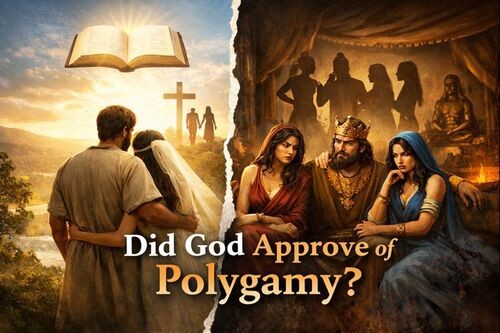
Photo Source: Artificially Generated
Note: If you have any questions about this topic or any of Pastor John's blog articles, feel free to contact him directly at pastor.john@fbcmoriarty.org, or you may contact the church office at office@fbcmoriarty.org.
Why the Old Testament’s Many Wives Don’t Cancel God’s Design for Marriage
One of the most common questions people ask when reading the Bible is this:
“If God wanted one man and one woman, why do so many Old Testament heroes
have multiple wives?”
So what are we supposed to think?
Did God change His mind?
Did He lower His standards?
Or did He approve of polygamy back then but not now?
The answer is actually much clearer—and more hopeful—than many people realize.
God’s Design for Marriage Never Changed
The Bible does not start with multiple wives. It starts with one man and one woman, for life.
This verse appears before sin ever enters the world. That matters. Genesis 2 is not describing a broken culture—it is revealing God’s original, good, and beautiful design.
In the original Hebrew, the word used here for “leave” means to leave behind, be unattached, forsake, loosen, or sever former loyalties, and "hold fast” (or "bond") means to cling to, join to, unite with, stick to, or be glued to—language used elsewhere for covenant faithfulness to God. In other words, marriage is pictured as a transfer of primary allegiance from one’s parents to one’s spouse and the formation of a new, exclusive covenant bond. This is not casual or temporary language; it is the vocabulary of lifelong, faithful attachment.
Marriage was created to be:
Jesus Himself later pointed back to this moment and said, “From the beginning it was not so,” meaning God never intended anything else.
Polygamy Enters After Sin—and Always Brings Pain
The first man in the Bible to take more than one wife was not a godly hero. It was Lamech, a violent and arrogant man (Genesis 4). From that moment on, every polygamous household in Scripture is filled with rivalry, jealousy, broken trust, and family division.
Consider just a few examples:
The Bible never praises polygamy. It records it honestly—and it always shows the damage it brings. This is a crucial distinction you should note: The Bible describes many sinful things without endorsing them.
Did God Permit Polygamy or Just Tolerate It?
With humility, I believe the best biblical answer is:
God tolerated it, but He did not approve of it.
There are many places in the Old Testament where God regulated broken human behavior without blessing it. Divorce, slavery, and monarchy all fall into this category. God set limits to restrain harm, but those limits never meant the behavior itself was good. Jesus explains this principle clearly when He says Moses allowed divorce “because of the hardness of your hearts.” In other words, God met sinful people where they were, but He never redefined what was right.
Polygamy fits that same pattern. God governed it to prevent chaos, abuse, and injustice, but He never called it good. God sometimes regulates sin without endorsing it.
God’s Displeasure Was Never Hidden
Even in the Old Testament, God made His moral direction clear. Kings were commanded not to multiply wives. Faithfulness to one’s spouse was continually tied to faithfulness to God. Prophets condemned covenant betrayal in marriage. Scripture consistently treats marriage as a sacred, exclusive bond.
By the time we reach the New Testament, all ambiguity disappears. Jesus restores God’s original design. Marriage is once again defined by Genesis. Church leaders are required to be faithful to one spouse. And marriage becomes a living picture of Christ and His church. The gospel does not lower God’s standard—it restores it.
Why This Matters Today
This topic matters because it teaches us how to read the Bible rightly. Just because something appears in Scripture does not mean God approves of it. The Bible tells the truth about fallen humanity—but it always points us back to God’s holy design. From Eden to Christ, God’s plan for marriage has always been the same: one man, one woman, united in covenant faithfulness for life. And in Jesus, broken things are not just tolerated—they are redeemed.
A Bible Q&A on Marriage, Multiple Wives, and God’s Design
This past week, I answered several good, thoughtful questions about this topic. For those interested, what follows are those answers for others' benefit:
Q1: If God designed marriage as one man and one woman, why does the Old Testament include polygamy?
Because the Old Testament tells the truth about a fallen world. After sin entered the human race, God’s good design for marriage was repeatedly distorted. The Bible records what people did, not just what they should have done. Polygamy appears in Scripture not as God’s ideal, but as a symptom of brokenness—just like violence, deception, and idolatry.
Q2: What was God’s original design for marriage?
God’s design is established in Genesis before sin ever entered the world:
Marriage was created to be:
Jesus later confirmed that this was not merely descriptive—it was prescriptive. It was God’s intent “from the beginning.”
Q3: Did God ever command or encourage polygamy?
No. There is not a single verse in the Bible where God commands, encourages, or praises a man for having multiple wives. Polygamy is always portrayed with negative consequences: jealousy, family division, emotional harm, and spiritual compromise. The Bible never presents it as something for us to imitate.
Q4: But didn’t God “allow” polygamy in the Law?
God regulated polygamy in the same way He regulated other broken realities like divorce and slavery—not because they were good, but because people were sinful.
Jesus explains this principle when He says Moses allowed divorce “because of the hardness of your hearts.” God governs sin to limit harm, but that does not mean He approves of it. God sometimes restrains sin without blessing it.
Q5: Why didn’t God immediately abolish polygamy in the Old Testament?
I personally believe it is because God works patiently with fallen people within fallen cultures. He is a Redeemer who moves sinful people toward holiness gradually rather than instantly erasing every sinful structure overnight. This does not mean God was morally neutral. It means He was merciful, guiding His people forward without abandoning them.
When God called Abraham, Jacob, and others, He was not starting with a holy culture. He was redeeming a deeply broken one. To abolish all entrenched family structures instantly would have produced massive injustice—abandoned women, fatherless children, and economic collapse. God instead begins reshaping hearts, not just laws.
God’s patience is not approval; it is mercy aimed at transformation.
We must recall that across the ancient world, polygamy was tied to:
Q6: Did polygamy ever lead to good outcomes in the Bible?
No. Every polygamous household in Scripture ends in sorrow, conflict, or spiritual decay.
The Bible consistently shows polygamy producing pain, not blessing.
Q7: How does the New Testament clarify this?
Jesus restores God’s original design for marriage. He points back to Genesis and says marriage is meant to be one man and one woman joined together by God. Church leaders are required to be faithful to one spouse. Marriage becomes a picture of Christ’s exclusive, covenant love for His church. The gospel does not lower God’s standards—it redeems us back to them.
Q8: So how should Christians understand polygamy today?
Polygamy was never God’s design. It was tolerated in a fallen world but never approved. In Christ, God’s original intention for marriage is fully restored. Marriage is meant to reflect faithful, exclusive, lifelong covenantal love—just as Christ loves His people.
Q9: Pastor, what is a one or two sentence summary?
God created marriage as one man and one woman for life; polygamy appears in Scripture because of human sin, not because of divine approval.
One of the most common questions people ask when reading the Bible is this:
“If God wanted one man and one woman, why do so many Old Testament heroes
have multiple wives?”
- Abraham had more than one woman in his household.
- Jacob had two wives.
- David and Solomon had many.
So what are we supposed to think?
Did God change His mind?
Did He lower His standards?
Or did He approve of polygamy back then but not now?
The answer is actually much clearer—and more hopeful—than many people realize.
God’s Design for Marriage Never Changed
The Bible does not start with multiple wives. It starts with one man and one woman, for life.
“Therefore a man shall leave his father and mother and hold fast to his wife, and
they shall become one flesh.” (Genesis 2:24)
This verse appears before sin ever enters the world. That matters. Genesis 2 is not describing a broken culture—it is revealing God’s original, good, and beautiful design.
In the original Hebrew, the word used here for “leave” means to leave behind, be unattached, forsake, loosen, or sever former loyalties, and "hold fast” (or "bond") means to cling to, join to, unite with, stick to, or be glued to—language used elsewhere for covenant faithfulness to God. In other words, marriage is pictured as a transfer of primary allegiance from one’s parents to one’s spouse and the formation of a new, exclusive covenant bond. This is not casual or temporary language; it is the vocabulary of lifelong, faithful attachment.
Marriage was created to be:
- Exclusive
- Covenant-bound
- One man and one woman joined into one flesh
Jesus Himself later pointed back to this moment and said, “From the beginning it was not so,” meaning God never intended anything else.
Polygamy Enters After Sin—and Always Brings Pain
The first man in the Bible to take more than one wife was not a godly hero. It was Lamech, a violent and arrogant man (Genesis 4). From that moment on, every polygamous household in Scripture is filled with rivalry, jealousy, broken trust, and family division.
Consider just a few examples:
- Abraham’s household fractured under jealousy between Sarah and Hagar.
- Jacob’s wives competed for affection and status.
- David’s many marriages produced chaos and heartbreak.
- Solomon’s wives eventually pulled his heart away from God.
The Bible never praises polygamy. It records it honestly—and it always shows the damage it brings. This is a crucial distinction you should note: The Bible describes many sinful things without endorsing them.
Did God Permit Polygamy or Just Tolerate It?
With humility, I believe the best biblical answer is:
God tolerated it, but He did not approve of it.
There are many places in the Old Testament where God regulated broken human behavior without blessing it. Divorce, slavery, and monarchy all fall into this category. God set limits to restrain harm, but those limits never meant the behavior itself was good. Jesus explains this principle clearly when He says Moses allowed divorce “because of the hardness of your hearts.” In other words, God met sinful people where they were, but He never redefined what was right.
Polygamy fits that same pattern. God governed it to prevent chaos, abuse, and injustice, but He never called it good. God sometimes regulates sin without endorsing it.
God’s Displeasure Was Never Hidden
Even in the Old Testament, God made His moral direction clear. Kings were commanded not to multiply wives. Faithfulness to one’s spouse was continually tied to faithfulness to God. Prophets condemned covenant betrayal in marriage. Scripture consistently treats marriage as a sacred, exclusive bond.
By the time we reach the New Testament, all ambiguity disappears. Jesus restores God’s original design. Marriage is once again defined by Genesis. Church leaders are required to be faithful to one spouse. And marriage becomes a living picture of Christ and His church. The gospel does not lower God’s standard—it restores it.
Why This Matters Today
This topic matters because it teaches us how to read the Bible rightly. Just because something appears in Scripture does not mean God approves of it. The Bible tells the truth about fallen humanity—but it always points us back to God’s holy design. From Eden to Christ, God’s plan for marriage has always been the same: one man, one woman, united in covenant faithfulness for life. And in Jesus, broken things are not just tolerated—they are redeemed.
A Bible Q&A on Marriage, Multiple Wives, and God’s Design
This past week, I answered several good, thoughtful questions about this topic. For those interested, what follows are those answers for others' benefit:
Q1: If God designed marriage as one man and one woman, why does the Old Testament include polygamy?
Because the Old Testament tells the truth about a fallen world. After sin entered the human race, God’s good design for marriage was repeatedly distorted. The Bible records what people did, not just what they should have done. Polygamy appears in Scripture not as God’s ideal, but as a symptom of brokenness—just like violence, deception, and idolatry.
Q2: What was God’s original design for marriage?
God’s design is established in Genesis before sin ever entered the world:
“A man shall leave his father and mother and hold fast to his wife, and they shall become one flesh.” (Genesis 2:24)
Marriage was created to be:
- One man
- One woman
- A covenant of exclusive, lifelong faithfulness
Jesus later confirmed that this was not merely descriptive—it was prescriptive. It was God’s intent “from the beginning.”
Q3: Did God ever command or encourage polygamy?
No. There is not a single verse in the Bible where God commands, encourages, or praises a man for having multiple wives. Polygamy is always portrayed with negative consequences: jealousy, family division, emotional harm, and spiritual compromise. The Bible never presents it as something for us to imitate.
Q4: But didn’t God “allow” polygamy in the Law?
God regulated polygamy in the same way He regulated other broken realities like divorce and slavery—not because they were good, but because people were sinful.
Jesus explains this principle when He says Moses allowed divorce “because of the hardness of your hearts.” God governs sin to limit harm, but that does not mean He approves of it. God sometimes restrains sin without blessing it.
Q5: Why didn’t God immediately abolish polygamy in the Old Testament?
I personally believe it is because God works patiently with fallen people within fallen cultures. He is a Redeemer who moves sinful people toward holiness gradually rather than instantly erasing every sinful structure overnight. This does not mean God was morally neutral. It means He was merciful, guiding His people forward without abandoning them.
When God called Abraham, Jacob, and others, He was not starting with a holy culture. He was redeeming a deeply broken one. To abolish all entrenched family structures instantly would have produced massive injustice—abandoned women, fatherless children, and economic collapse. God instead begins reshaping hearts, not just laws.
“The LORD is compassionate and gracious, slow to anger and abounding in faithful love.” (Psalm 103:8)
God’s patience is not approval; it is mercy aimed at transformation.
We must recall that across the ancient world, polygamy was tied to:
- Survival (widows without protection)
- Wealth
- Tribal inheritance
- Political alliances
- Kings were forbidden to multiply wives (Deut. 17:17)
In short, Israel did not invent polygamy—it inherited it from the broken, sinful culture around it. And God entered that world to redeem people from it. But even in that culture, God planted seeds of a better design:
- Covenant faithfulness in marriage was stressed (Mal. 2:14–15)
- God describes His relationship with Israel as one husband and one bride (Isa. 54:5; Hos. 2:19)
The direction of Scripture has always been toward exclusivity and covenant faithfulness. So in summary, God did not abolish polygamy immediately because:
- Hearts were hardened (Matt. 19:8)
- Cultures were deeply broken
- Redemption is progressive, not instant
- God was preserving His redemptive plan
Q6: Did polygamy ever lead to good outcomes in the Bible?
No. Every polygamous household in Scripture ends in sorrow, conflict, or spiritual decay.
- Abraham’s family fractured.
- Jacob’s wives fought and manipulated.
- David’s family imploded.
- Solomon’s marriages led to idolatry.
The Bible consistently shows polygamy producing pain, not blessing.
Q7: How does the New Testament clarify this?
Jesus restores God’s original design for marriage. He points back to Genesis and says marriage is meant to be one man and one woman joined together by God. Church leaders are required to be faithful to one spouse. Marriage becomes a picture of Christ’s exclusive, covenant love for His church. The gospel does not lower God’s standards—it redeems us back to them.
Q8: So how should Christians understand polygamy today?
Polygamy was never God’s design. It was tolerated in a fallen world but never approved. In Christ, God’s original intention for marriage is fully restored. Marriage is meant to reflect faithful, exclusive, lifelong covenantal love—just as Christ loves His people.
Q9: Pastor, what is a one or two sentence summary?
God created marriage as one man and one woman for life; polygamy appears in Scripture because of human sin, not because of divine approval.
"Jesus answered and said to him, “Truly, truly, I say to you, unless one is born again he cannot see the kingdom of God.” -- John 3:3
Have you been born again? The Bible says all have sinned and fallen short of the glory of God and that the wages of sin is death. However, there is Good News! The Bible also says that the free gift of God is eternal life in Christ Jesus our Lord (Romans 3:23 and 6:23). Is Jesus Christ your personal Lord and Savior? If not, why not?
Have you been born again? The Bible says all have sinned and fallen short of the glory of God and that the wages of sin is death. However, there is Good News! The Bible also says that the free gift of God is eternal life in Christ Jesus our Lord (Romans 3:23 and 6:23). Is Jesus Christ your personal Lord and Savior? If not, why not?
Posted in Coffee Hour w/ Pastor John
Posted in Polygamy, Marriage, One Man One Woman, Lamach, Genesis 2, Multiple Wives, God\\\\\\\\\\\\\\\\\\\\\\\\\\\\\\\'s Design
Posted in Polygamy, Marriage, One Man One Woman, Lamach, Genesis 2, Multiple Wives, God\\\\\\\\\\\\\\\\\\\\\\\\\\\\\\\'s Design
Recent
Archive
2026
March
April
2025
April
September
October
2024
February
April
July
December
2023