
Why the Levites Had "No Inheritance" And Yet Received Cities and Land
Why the Levites Had "No Inheritance" And Yet Received Cities and Land
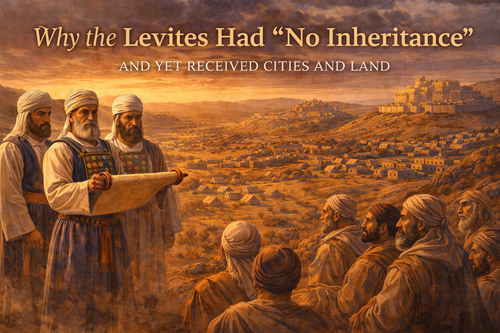
Photo Source: Artificially Generated
Note: If you have any questions about this topic or any of Pastor John's blog articles, feel free to contact him directly at pastor.john@fbcmoriarty.org, or you may contact the church office at office@fbcmoriarty.org.
This past week, someone in our church asked a thoughtful question that many careful Bible readers eventually notice. When reading the first books of the Bible, it can seem as though there is a contradiction regarding the tribe of Levi. In some places, God clearly says that the Levites have no inheritance in the land. Yet in other passages, we read that they were given cities and land. So which is it? Did the Levites receive an inheritance or not?
First, where does the bible say the Levites had no inheritance? What exactly does it say? The clearest statements are in Numbers and Deuteronomy. Let’s begin with the key texts, which must be understood as being in harmony with each other and not in contradiction. That's because God cannot lie, so His Word cannot contradict. Scripture does not fight against itself—it harmonizes perfectly because it comes from a perfectly truthful God” (Titus 1:2, Numbers 23:19, John 17:17, 2 Tim. 3:16, John 10:35, James 1:17).
In Numbers 18:20, God tells Aaron: “You will have no inheritance in their land, and no portion among them. I am your portion and your inheritance among the Israelites.” (CSB)
In Deuteronomy 10:9, Moses is recounting events from earlier (Exodus–Numbers period), and Moses reminds Israel: “That is why Levi does not have a portion or inheritance like his brothers; the LORD is his inheritance, as the LORD your God told him.” (CSB)
In Deuteronomy 18:1–2, we again read: “The Levitical priests—all the tribe of Levi—will have no portion or inheritance with Israel. They will eat the food offerings presented to the LORD; that is their inheritance. Although Levi has no inheritance among his brothers, the LORD is his inheritance, as he promised him.” (CSB)
These texts are very explicit. Levi does not receive what the other tribes receive.
But, of course, now the question becomes unavoidable:
If the Levites have "no inheritance…" why are they given land?
The answer becomes clear when we understand what the Bible actually means by the word “inheritance.” When Scripture is read carefully—paying attention to its historical setting, wording, and theology—we discover there is no contradiction at all. Instead, we see a beautiful picture of God’s provision and purpose.
To put it simply, the Levites did not receive a tribal inheritance like the other tribes of Israel. The tribes of Judah, Ephraim, Benjamin, and the others were each given large portions of land in Canaan. These territories were passed down through families and became part of each tribe’s identity. Levi, however, was different. They were not given a large, continuous region of land to call their own.
Instead, God told them something remarkable: He Himself would be their inheritance. That did not mean they were left without anything. The Levites were supported in other ways. They received tithes and offerings from the people, portions of sacrifices, and they were assigned specific roles in serving God. They were also given cities scattered throughout Israel, along with small areas of pastureland to support their daily needs. So while they did not receive land in the same way as the other tribes, they were still provided for.
The tension many people feel comes from statements like those in Numbers and Deuteronomy, where God says the Levites have “no inheritance.” At first glance, that sounds absolute. But when we look closely, we see that the Bible qualifies this statement. The Levites had no inheritance “like their brothers.” In other words, they were not given a tribal territory like the other tribes.
Later passages, such as those in Numbers 35 and Joshua 21, explain that the Levites were given cities to live in—forty-eight in total, spread throughout the land. These were not tribal territories, but places to live and carry out their ministry. They lived among the other tribes rather than in one unified region of their own.
This leads us to the key idea: the Bible uses the word “inheritance” in more than one way. For most tribes, inheritance meant land—territory that defined their identity and was passed down through generations. For the Levites, inheritance meant something different. Their inheritance was God Himself, along with the provision He gave through the worship system of Israel.
This arrangement was not random. It was intentional. The Levites were set apart for a special purpose. They were responsible for serving in the tabernacle (and later the temple), assisting the priests, teaching God’s law, and helping guide the spiritual life of the nation. Because of this calling, their lives were not meant to revolve around farming or land ownership, but around service to God.
Their identity was not rooted in land, but in their relationship with the Lord. While other tribes could point to their territory and say, “This is ours,” the Levites were to say, “The LORD is ours.” Their provision came through the worship of God—through tithes, offerings, and the generosity of the people.
In this way, God was not depriving them. He was providing for them differently. The cities and pasturelands they received were not a contradiction of God’s earlier words, but a practical way to support them in their calling. They had what they needed, but their dependence was directly on God rather than on land.
Interestingly, there is another story behind this arrangement. In Genesis, the tribe of Levi was told they would be scattered throughout Israel as a result of sin. At first, this scattering was a form of judgment. But later, God transformed it into something good. Instead of being a sign of disgrace, their scattering became a means of blessing. By being spread throughout the land, the Levites were able to teach God’s law and help lead the people in worship everywhere.
This shows a powerful truth about God: He often takes what is broken or difficult and turns it into something meaningful and purposeful. What began as discipline became a design for ministry. When God says, “I am your inheritance,” He is saying more than something symbolic. He is declaring that He Himself will be their provider, their security, and their identity. The Levites were to trust Him in a way that was visible to the entire nation.
When we put all the passages together, the picture becomes clear. The Levites did not receive a tribal land inheritance like the other tribes. However, they were given cities, pasturelands, and ongoing support through the worship system. Above all, their true inheritance was the Lord Himself. This is not a contradiction. It is a carefully designed system that reflects God’s wisdom and purpose.
And there is an important lesson for us in all of this. The greatest inheritance is not land, wealth, or possessions. It is God Himself. The Levites remind us that what we have is not as important as who we belong to. In the end, their story points to a greater truth for all believers: our greatest treasure is not what God gives us, but God Himself.
First, where does the bible say the Levites had no inheritance? What exactly does it say? The clearest statements are in Numbers and Deuteronomy. Let’s begin with the key texts, which must be understood as being in harmony with each other and not in contradiction. That's because God cannot lie, so His Word cannot contradict. Scripture does not fight against itself—it harmonizes perfectly because it comes from a perfectly truthful God” (Titus 1:2, Numbers 23:19, John 17:17, 2 Tim. 3:16, John 10:35, James 1:17).
In Numbers 18:20, God tells Aaron: “You will have no inheritance in their land, and no portion among them. I am your portion and your inheritance among the Israelites.” (CSB)
In Deuteronomy 10:9, Moses is recounting events from earlier (Exodus–Numbers period), and Moses reminds Israel: “That is why Levi does not have a portion or inheritance like his brothers; the LORD is his inheritance, as the LORD your God told him.” (CSB)
In Deuteronomy 18:1–2, we again read: “The Levitical priests—all the tribe of Levi—will have no portion or inheritance with Israel. They will eat the food offerings presented to the LORD; that is their inheritance. Although Levi has no inheritance among his brothers, the LORD is his inheritance, as he promised him.” (CSB)
These texts are very explicit. Levi does not receive what the other tribes receive.
But, of course, now the question becomes unavoidable:
If the Levites have "no inheritance…" why are they given land?
The answer becomes clear when we understand what the Bible actually means by the word “inheritance.” When Scripture is read carefully—paying attention to its historical setting, wording, and theology—we discover there is no contradiction at all. Instead, we see a beautiful picture of God’s provision and purpose.
To put it simply, the Levites did not receive a tribal inheritance like the other tribes of Israel. The tribes of Judah, Ephraim, Benjamin, and the others were each given large portions of land in Canaan. These territories were passed down through families and became part of each tribe’s identity. Levi, however, was different. They were not given a large, continuous region of land to call their own.
Instead, God told them something remarkable: He Himself would be their inheritance. That did not mean they were left without anything. The Levites were supported in other ways. They received tithes and offerings from the people, portions of sacrifices, and they were assigned specific roles in serving God. They were also given cities scattered throughout Israel, along with small areas of pastureland to support their daily needs. So while they did not receive land in the same way as the other tribes, they were still provided for.
The tension many people feel comes from statements like those in Numbers and Deuteronomy, where God says the Levites have “no inheritance.” At first glance, that sounds absolute. But when we look closely, we see that the Bible qualifies this statement. The Levites had no inheritance “like their brothers.” In other words, they were not given a tribal territory like the other tribes.
Later passages, such as those in Numbers 35 and Joshua 21, explain that the Levites were given cities to live in—forty-eight in total, spread throughout the land. These were not tribal territories, but places to live and carry out their ministry. They lived among the other tribes rather than in one unified region of their own.
This leads us to the key idea: the Bible uses the word “inheritance” in more than one way. For most tribes, inheritance meant land—territory that defined their identity and was passed down through generations. For the Levites, inheritance meant something different. Their inheritance was God Himself, along with the provision He gave through the worship system of Israel.
This arrangement was not random. It was intentional. The Levites were set apart for a special purpose. They were responsible for serving in the tabernacle (and later the temple), assisting the priests, teaching God’s law, and helping guide the spiritual life of the nation. Because of this calling, their lives were not meant to revolve around farming or land ownership, but around service to God.
Their identity was not rooted in land, but in their relationship with the Lord. While other tribes could point to their territory and say, “This is ours,” the Levites were to say, “The LORD is ours.” Their provision came through the worship of God—through tithes, offerings, and the generosity of the people.
In this way, God was not depriving them. He was providing for them differently. The cities and pasturelands they received were not a contradiction of God’s earlier words, but a practical way to support them in their calling. They had what they needed, but their dependence was directly on God rather than on land.
Interestingly, there is another story behind this arrangement. In Genesis, the tribe of Levi was told they would be scattered throughout Israel as a result of sin. At first, this scattering was a form of judgment. But later, God transformed it into something good. Instead of being a sign of disgrace, their scattering became a means of blessing. By being spread throughout the land, the Levites were able to teach God’s law and help lead the people in worship everywhere.
This shows a powerful truth about God: He often takes what is broken or difficult and turns it into something meaningful and purposeful. What began as discipline became a design for ministry. When God says, “I am your inheritance,” He is saying more than something symbolic. He is declaring that He Himself will be their provider, their security, and their identity. The Levites were to trust Him in a way that was visible to the entire nation.
When we put all the passages together, the picture becomes clear. The Levites did not receive a tribal land inheritance like the other tribes. However, they were given cities, pasturelands, and ongoing support through the worship system. Above all, their true inheritance was the Lord Himself. This is not a contradiction. It is a carefully designed system that reflects God’s wisdom and purpose.
And there is an important lesson for us in all of this. The greatest inheritance is not land, wealth, or possessions. It is God Himself. The Levites remind us that what we have is not as important as who we belong to. In the end, their story points to a greater truth for all believers: our greatest treasure is not what God gives us, but God Himself.
"Jesus answered and said to him, “Truly, truly, I say to you, unless one is born again he cannot see the kingdom of God.” -- John 3:3
Have you been born again? The Bible says all have sinned and fallen short of the glory of God and that the wages of sin is death. However, there is Good News! The Bible also says that the free gift of God is eternal life in Christ Jesus our Lord (Romans 3:23 and 6:23). Is Jesus Christ your personal Lord and Savior? If not, why not?
Have you been born again? The Bible says all have sinned and fallen short of the glory of God and that the wages of sin is death. However, there is Good News! The Bible also says that the free gift of God is eternal life in Christ Jesus our Lord (Romans 3:23 and 6:23). Is Jesus Christ your personal Lord and Savior? If not, why not?
Recent
Was the Apostle Paul a False Teacher? Why Christians Must Reject This Dangerous Deception
October 14th, 2026
A Faith That Does Not Shrink Back
September 22nd, 2026
Can I be Angry at God?
September 5th, 2026
Why Church Membership Matters
July 29th, 2026
What Are the Apocryphal 'Gospels?'
July 1st, 2026
Archive
2026
March
April
2025
April
September
October
2024
February
April
July
December
2023