
Why Christmas Matters: Immanuel, Prophecy, and God’s Perfect Timing
Why Christmas Matters:
Immanuel, Prophecy, and God’s Perfect Timing
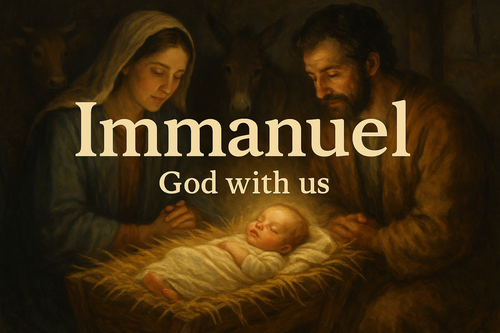
Photo Source: Artificially Generated
Note: If you have any questions about this topic or any of Pastor John's blog articles, feel free to contact him directly at pastor.john@fbcmoriarty.org, or you may contact the church office at office@fbcmoriarty.org.
Every year, the Christmas season rolls around with lights, decorations, warm gatherings, and familiar songs. But behind all the traditions and noise, Christmas carries a meaning unlike any other holiday. At the heart of it is a truth so staggering, so hope-giving, that it stands apart from anything else we celebrate: God came to be with us.
The purpose of Christmas is simple yet profound. We celebrate Christmas because God the Son took on human flesh and entered our world to save sinners. It is not just a sentimental season or a cultural moment—it is the moment in history when God Himself stepped into our sin-filled, broken world. Matthew 1:21 says, “She will give birth to a son, and you are to name him Jesus, because he will save his people from their sins.” That is the heartbeat of Christmas.
Christmas stands apart from every other holiday because it celebrates something God did, not something we did. Other holidays commemorate our achievements or historical moments, but Christmas announces that God entered human history to rescue us from sin and restore our relationship with Him. It is grace wrapped in swaddling cloths. It is heaven touching earth.
The Bible gives a beautiful name to the newborn Jesus: Immanuel, which means “God with us.” This name comes straight out of the Old Testament. In Matthew 1:23, the Gospel writer quotes Isaiah 7:14, where God promised a sign to His people centuries earlier: “The virgin will conceive, have a son, and name him Immanuel.” In its original setting, Isaiah 7 spoke to a king named Ahaz during a moment of national fear and political turmoil. God told Ahaz that a child’s birth would serve as a sign that He was still present with His people and had not abandoned His promises.
But Isaiah 7 was more than just a promise for one moment in Judah’s history. The prophecy reached beyond its immediate fulfillment toward something far greater. A child born in Ahaz’s day would be a sign of God’s presence, but he would not be God Himself. Only in Jesus—born of the virgin Mary—does the name Immanuel reach its fullest and truest meaning. Jesus is not simply a reminder that God is with us. Jesus is God with us.
This is the wonder of Christmas. The eternal Son of God did not shout His love from the heavens. He came down. He entered our humanity—our weakness, pain, and temptation—so that He might redeem us from the inside out. Christmas tells us God did not stay distant from the mess of our world. He stepped right into it.
But a common question about Christmas is: Why was Jesus born when He was? Why not earlier—or later? During this past week's local Follow the Son Bible Club for middle and high school students, another leader, who is a member of our church, and I discussed these exact questions with the students. The Bible answers this question clearly. Galatians 4:4 says, “When the time came to completion, God sent his Son.” That phrase—“the fullness of time”—means God chose the exact moment when everything in human history was prepared for the arrival of Christ.
For example, historically, the Roman Empire had created unprecedented conditions for the gospel to spread. The empire enjoyed relative peace. Roads connected major cities and regions. Travel and communication had become easier than ever. One common language, Greek, allowed people from different cultures to understand the same message. Spiritually, Israel was longing for deliverance, feeling the heavy weight of Roman occupation and yearning for the promised Messiah. The Law had exposed humanity’s inability to save itself, and the world was ripe for grace.
Theologically, all the pieces of God’s redemptive plan had come together. The promises made to Abraham, the covenant with David, and the prophecies of Isaiah and Micah were pointing to this exact moment in history. Jesus entered the world at a time of deep darkness because His coming was the light people desperately needed.
Christmas tells a story bigger than a baby in a manger. It is the story of our God who keeps His promises. It is the story of a Savior who steps into history, not randomly or accidentally, but at the perfect moment. It is the story of a Redeemer who came not only to live among us, but to die for us—so that through faith in Him, we might be brought back to God. Immanuel means you are not alone. It means God sees you. God knows your pain. God entered the world as it is—not as it should be—to save sinners, heal the brokenhearted, and give hope to the hopeless. Christmas is God’s announcement that He is with us, He is for us, and He has come to redeem us.
That is why Christmas is not merely festive—it is miraculous. And it is why the message of Christmas never grows old: God came to us so that, by His grace and through faith in Jesus Christ, we might be brought back to Him—not as rebels, but as sons and daughters, heirs of His kingdom, and members of God’s own household.
The purpose of Christmas is simple yet profound. We celebrate Christmas because God the Son took on human flesh and entered our world to save sinners. It is not just a sentimental season or a cultural moment—it is the moment in history when God Himself stepped into our sin-filled, broken world. Matthew 1:21 says, “She will give birth to a son, and you are to name him Jesus, because he will save his people from their sins.” That is the heartbeat of Christmas.
Christmas stands apart from every other holiday because it celebrates something God did, not something we did. Other holidays commemorate our achievements or historical moments, but Christmas announces that God entered human history to rescue us from sin and restore our relationship with Him. It is grace wrapped in swaddling cloths. It is heaven touching earth.
The Bible gives a beautiful name to the newborn Jesus: Immanuel, which means “God with us.” This name comes straight out of the Old Testament. In Matthew 1:23, the Gospel writer quotes Isaiah 7:14, where God promised a sign to His people centuries earlier: “The virgin will conceive, have a son, and name him Immanuel.” In its original setting, Isaiah 7 spoke to a king named Ahaz during a moment of national fear and political turmoil. God told Ahaz that a child’s birth would serve as a sign that He was still present with His people and had not abandoned His promises.
But Isaiah 7 was more than just a promise for one moment in Judah’s history. The prophecy reached beyond its immediate fulfillment toward something far greater. A child born in Ahaz’s day would be a sign of God’s presence, but he would not be God Himself. Only in Jesus—born of the virgin Mary—does the name Immanuel reach its fullest and truest meaning. Jesus is not simply a reminder that God is with us. Jesus is God with us.
This is the wonder of Christmas. The eternal Son of God did not shout His love from the heavens. He came down. He entered our humanity—our weakness, pain, and temptation—so that He might redeem us from the inside out. Christmas tells us God did not stay distant from the mess of our world. He stepped right into it.
But a common question about Christmas is: Why was Jesus born when He was? Why not earlier—or later? During this past week's local Follow the Son Bible Club for middle and high school students, another leader, who is a member of our church, and I discussed these exact questions with the students. The Bible answers this question clearly. Galatians 4:4 says, “When the time came to completion, God sent his Son.” That phrase—“the fullness of time”—means God chose the exact moment when everything in human history was prepared for the arrival of Christ.
For example, historically, the Roman Empire had created unprecedented conditions for the gospel to spread. The empire enjoyed relative peace. Roads connected major cities and regions. Travel and communication had become easier than ever. One common language, Greek, allowed people from different cultures to understand the same message. Spiritually, Israel was longing for deliverance, feeling the heavy weight of Roman occupation and yearning for the promised Messiah. The Law had exposed humanity’s inability to save itself, and the world was ripe for grace.
Theologically, all the pieces of God’s redemptive plan had come together. The promises made to Abraham, the covenant with David, and the prophecies of Isaiah and Micah were pointing to this exact moment in history. Jesus entered the world at a time of deep darkness because His coming was the light people desperately needed.
Christmas tells a story bigger than a baby in a manger. It is the story of our God who keeps His promises. It is the story of a Savior who steps into history, not randomly or accidentally, but at the perfect moment. It is the story of a Redeemer who came not only to live among us, but to die for us—so that through faith in Him, we might be brought back to God. Immanuel means you are not alone. It means God sees you. God knows your pain. God entered the world as it is—not as it should be—to save sinners, heal the brokenhearted, and give hope to the hopeless. Christmas is God’s announcement that He is with us, He is for us, and He has come to redeem us.
That is why Christmas is not merely festive—it is miraculous. And it is why the message of Christmas never grows old: God came to us so that, by His grace and through faith in Jesus Christ, we might be brought back to Him—not as rebels, but as sons and daughters, heirs of His kingdom, and members of God’s own household.
"Jesus answered and said to him, “Truly, truly, I say to you, unless one is born again he cannot see the kingdom of God.” -- John 3:3
Have you been born again? The Bible says all have sinned and fallen short of the glory of God and that the wages of sin is death. However, there is Good News! The Bible also says that the free gift of God is eternal life in Christ Jesus our Lord (Romans 3:23 and 6:23). Is Jesus Christ your personal Lord and Savior? If not, why not?
Have you been born again? The Bible says all have sinned and fallen short of the glory of God and that the wages of sin is death. However, there is Good News! The Bible also says that the free gift of God is eternal life in Christ Jesus our Lord (Romans 3:23 and 6:23). Is Jesus Christ your personal Lord and Savior? If not, why not?
Recent
Was the Apostle Paul a False Teacher? Why Christians Must Reject This Dangerous Deception
October 14th, 2026
A Faith That Does Not Shrink Back
September 22nd, 2026
Can I be Angry at God?
September 5th, 2026
Why Church Membership Matters
July 29th, 2026
What Are the Apocryphal 'Gospels?'
July 1st, 2026
Archive
2026
March
April
2025
April
September
October
2024
February
April
July
December
2023